


 Turkish
 English
 Russian
 German
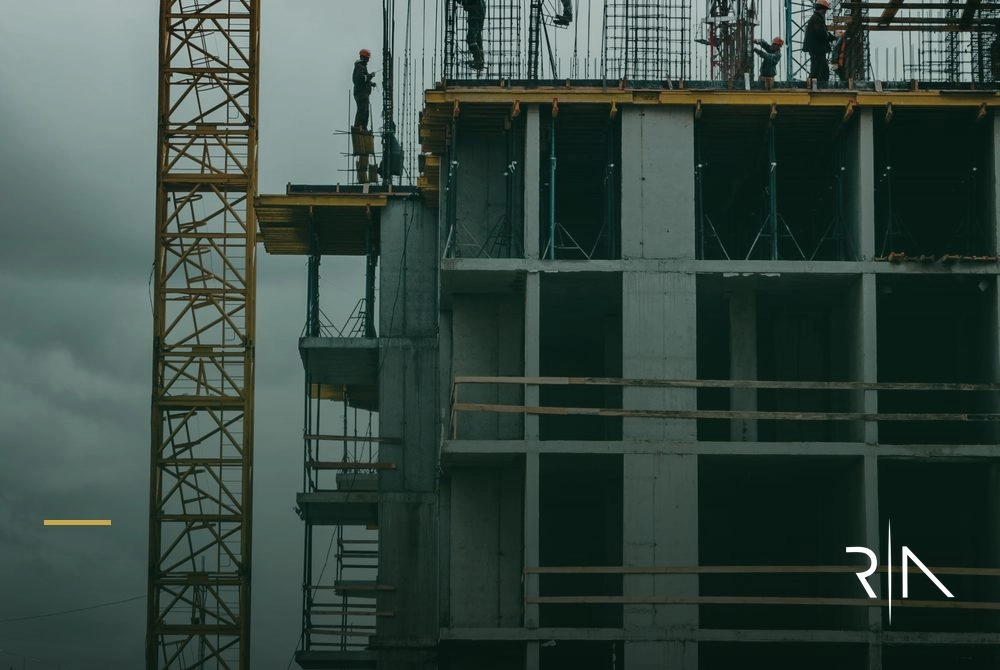
Kat irtifakı (often translated as "construction servitude" or "floor easement") is a right established by the landowners for the future independent units of a building that is under construction or yet to be built, and it is attached to a share of the land. On the title deed, the property is usually still described as "land" (arsa), while the apartment number is recorded in the declarations section.
An apartment with a kat irtifakı title deed can lawfully be purchased. However, the buyer also takes on the risk that the building may not be completed in line with its approved project and may not obtain an occupancy permit (iskân). This article explains what kat irtifakı means, how it differs from full condominium ownership (kat mülkiyeti), and what to check before buying such an apartment.
What Does Kat İrtifakı Mean?
Kat irtifakı is defined in Article 2(c) of the Turkish Condominium Law No. 634. Under the law, it is an easement established by the owner or co-owners of a plot of land for the independent units of a building that is being built or will be built on that plot and that will later become subject to condominium ownership. The holder of this right is called the "kat irtifak sahibi".
Kat irtifakı is the intermediate stage that determines, while the building is still unfinished, to whom each independent unit will legally belong. Once the building is completed in accordance with its project and the occupancy permit is issued, kat irtifakı turns into kat mülkiyeti. It can therefore be thought of as the "construction-stage title deed" of an apartment.
Under Article 10 of the Condominium Law, both condominium ownership and kat irtifakı arise through an official deed and registration in the land registry. A protocol, a private contract or a developer's document that is not registered with the land registry does not grant a kat irtifakı right.
How Can You Recognise a Kat İrtifakı Title Deed?
On a kat irtifakı title deed, the nature of the property is usually written as "land" or "masonry apartment land". The apartment number, its floor and the land share allocated to it are shown in the declarations section of the land register. Article 14 of the Condominium Law likewise provides that kat irtifakı is established by indicating, in the declarations section, the land share allocated to each independent unit.
On a kat mülkiyeti title deed, by contrast, the property type reflects the use of the unit, such as "residence" or "shop", and the independent unit is registered as a separate property in the condominium register. The most reliable way to see which stage a title deed is at is to check the property type and the declarations section in an up-to-date land registry record obtained from the land registry office or via e-Devlet.
What Is the Difference Between Kat İrtifakı and Kat Mülkiyeti?
The key difference is whether the building has been completed and an occupancy permit has been issued. Kat irtifakı belongs to the period before completion, while kat mülkiyeti belongs to a building with an occupancy permit. A condominium owner enjoys all the rights and powers that the Turkish Civil Code grants to owners over their independent unit (Condominium Law, Art. 15).
| Criterion | Kat İrtifakı | Kat Mülkiyeti |
|---|---|---|
| Status of the building | To be built or under construction | Completed, with an occupancy permit |
| Nature of the right | Easement attached to a land share (Art. 2/c) | Ownership of the independent unit (Art. 2/a) |
| Description on the title deed | Usually "land"; unit number in the declarations section | "Residence", "shop", etc.; unit registered separately |
| Documents required | Approved architectural project and management plan (Art. 14) | Occupancy permit and the documents listed in Art. 12 |
| Electricity, water, sewerage | As a rule, not connected until the occupancy permit is issued (Zoning Law, Art. 31) | No obstacle, as the occupancy permit exists |
| Transfer and mortgage | Possible | Possible |
Can You Buy an Apartment with a Kat İrtifakı Title Deed?
Yes. Kat irtifakı is a right in rem registered with the land registry; it can be transferred by an official deed at the land registry office and can be mortgaged. The real question is not whether the apartment can be bought, but whether the building will be completed in line with its project and obtain an occupancy permit.
A buyer of a kat irtifakı apartment acquires a value that depends on the completion of construction and the issuance of the occupancy permit. If the building deviates from its project, or if a breach of zoning rules cannot be remedied, no occupancy permit will be granted and the transition to kat mülkiyeti will not be possible. The Turkish Court of Cassation emphasises that a building which breaches zoning legislation and cannot be legalised has no economic value:
Court of Cassation, 6th Civil Chamber, Docket 2022/3534, Decision 2024/1987, 05.06.2024 (unofficial translation)"If there is a breach of zoning legislation, which concerns public order, delivery cannot be deemed to have taken place until such breaches are remedied. Otherwise, a building that is illegal and in breach of zoning rules, and that must be demolished because it cannot be legalised, will have no economic value."
In Antalya in particular, a large share of off-plan sales, holiday residence projects and developments marketed to foreign buyers take place at the kat irtifakı stage. An apartment bought during this period remains tied to the overall legal status of the building until the occupancy permit stage.
What Are the Risks of Buying a Kat İrtifakı Apartment?
The risks stem less from the apartment itself than from the legal status of the building, the land and the developer. The most common risks in practice are:
Failure to obtain an occupancy permit
If the building is not constructed in accordance with its project, no occupancy permit is issued. Under Article 31 of the Zoning Law No. 3194, buildings without an occupancy permit cannot benefit from electricity, water and sewerage services until the permit is obtained. In buildings without an occupancy permit, utility subscription problems, difficulties in resale and financing, and the risk of administrative sanctions for zoning breaches may arise together.
Disputes between the landowner and the developer
This risk arises frequently in cities such as Antalya, where the "flat-for-land" construction model is widespread. Under a flat-for-land construction contract, the developer may sell some of the apartments before the title is transferred to the developer. If a dispute arises between the landowner and the developer over termination of the contract or cancellation of the title deed, a buyer who purchased from the developer may be drawn into it. The General Assembly of Civil Chambers of the Court of Cassation has held that a good-faith third party who buys an independent unit from the developer in reliance on the land registry must be protected:
Court of Cassation, General Assembly of Civil Chambers, Docket 2023/574, Decision 2025/505, 10.09.2025 (unofficial translation)"As explained above, the acquisition of a good-faith third party who purchases a land share or an independent unit from the developer must be protected under the 'principle of reliance on the land registry' pursuant to Article 1023 of the Turkish Civil Code. This principle may only be departed from if it is proven that the third party acted in bad faith when purchasing the property."
This protection rests on the buyer having acquired a right registered in the land registry. Private contracts signed only with the developer, without a transfer at the land registry, do not provide the same protection. In addition, if the declarations section contains an annotation of the flat-for-land construction contract, the buyer may be deemed to have known of that contract.
Mortgages and attachments
A mortgage registered over the entire plot, for example one taken out by the developer for financing, also affects the land share of the apartment purchased. The mortgages section and the annotations section of the land register must be examined before the sale.
Delayed delivery and incomplete work
Failure to complete construction within the contractual period, incomplete or defective workmanship, and common areas not built in line with the project are frequent sources of dispute. In such cases, the buyer's rights differ depending on the type of contract and the capacity of the parties.
The property type and the independent unit number in the declarations section; the land share allocated to the unit; mortgages in the mortgages section; attachments, interim injunctions or sale promise annotations in the annotations section; any record of a flat-for-land construction contract in the declarations section; and whether the building permit and the approved architectural project at the municipality match the unit.
What Rights Do You Have When Buying Off-Plan from a Developer?
Sales in which the price of a residential property is paid in advance, in a lump sum or in instalments, before delivery are regulated as "pre-paid housing sales" under the Consumer Protection Law No. 6502. These provisions apply where the buyer is a consumer and the seller acts for commercial or professional purposes.
Under Article 40 of the law, a pre-paid housing sales contract cannot be concluded with consumers before a building permit has been obtained. Under Article 41, the sale must be registered with the land registry, and a promise-to-sell contract must be executed before a notary in official form. Article 44 provides that registration of the kat irtifakı in the consumer's name together with the transfer of possession is also deemed to constitute transfer and delivery.
| Right / Obligation | Period and Scope | Legal Basis |
|---|---|---|
| Pre-contract information form | Must be provided at least one day before the contract | Law 6502, Art. 40/2 |
| Right of withdrawal | Within 14 days, without giving reasons and without paying a penalty | Law 6502, Art. 43 |
| Delivery period | The period promised in the contract; in any case at most 48 months from the contract date | Law 6502, Art. 44 |
| Rescission of the contract | Up to 24 months from the contract date without reason; the seller may claim compensation of up to 2% for the first 3 months, 4% for 3-6 months, 6% for 6-12 months and 8% for 12-24 months | Law 6502, Art. 45/1 |
| Refund of the price | At the latest within 180 days of the rescission notice reaching the seller | Law 6502, Art. 45/3 |
If the seller fails to perform its obligations at all or properly, it cannot claim any amount from the consumer because of the rescission (Law 6502, Art. 45/2). These periods are time limits, and if they are missed the relevant right may no longer be exercisable. Contracts with a developer that were not executed before a notary carry separate validity risks under Turkish law.
Can You Get a Mortgage Loan for a Kat İrtifakı Apartment?
It is possible to use a housing loan for a kat irtifakı apartment, since kat irtifakı is a right in rem over which a mortgage can be established. However, whether a loan is granted, and its amount, depend on the bank's lending policy and the valuation report. Banks separately assess the stage of completion, the building permit and compliance with the project; for projects at an early stage of construction, a loan may be refused or limited.
In pre-paid housing sales financed wholly or partly by a linked loan, the loan agreement enters into force at the end of the 14-day withdrawal period. During this period, the housing finance institution cannot charge the consumer any interest, commission or similar cost (Law 6502, Art. 43/2).
What If the Title Deed Still Shows Kat İrtifakı Although an Occupancy Permit Exists?
If the title deed still shows kat irtifakı despite an occupancy permit having been issued, the transition to kat mülkiyeti has not been completed. Under the sixth paragraph of Article 10 of the Condominium Law, amended in 2021, the change of property type for buildings with an occupancy permit is carried out ex officio. A property with kat irtifakı is likewise converted to kat mülkiyeti ex officio without any further documents, and these procedures are exempt from the revolving fund service fee.
This ex officio procedure depends on the occupancy permit being transmitted electronically to the cadastre and land registry offices. For older occupancy permits or where records are incomplete, the conversion may not have taken place automatically. In that case, an application must be made to the land registry office.
How Is Kat İrtifakı Established?
Kat irtifakı is established at the request of the owner or all co-owners of the land. Under Article 14 of the Condominium Law, the architectural project approved by the competent authority and the management plan must be submitted to the land registry office. No separate management plan is required for the transition to kat mülkiyeti.
In flat-for-land construction contracts, where the independent units to be allocated to the right holders have been determined, kat irtifakı may also be established by the relevant authority at the developer's request (Condominium Law, Art. 10/5). Errors in allocating land shares to independent units can lead to significant disputes later on.
Is Kat İrtifakı the Same as a Shared Title Deed?
No. Under a shared title deed (hisseli tapu, co-ownership), the whole property belongs to several persons in proportion to their shares, and the co-owners are partners in the whole property rather than in a specific part of it. Under kat irtifakı, each land share is allocated to a specific independent unit defined in the project. The buyer of a kat irtifakı apartment knows from the land register which unit they will own. The legal consequences of shared title deeds are discussed in our guide to shared title deeds.
Most problems with kat irtifakı purchases arise not at the time of sale, but after construction is finished and at the occupancy permit stage. Non-delivery of apartments and construction defects discovered later are governed by different legal regimes and strict notification periods.
Frequently Asked Questions About Kat İrtifakı
What does a kat irtifakı title deed mean?
A kat irtifakı title deed shows a land share attached to a specific apartment in a building that is under construction or has no occupancy permit yet. The property is usually described as "land", and the apartment number and land share appear in the declarations section. Once the building is completed and the occupancy permit is issued, it becomes a kat mülkiyeti title deed.
How long does it take for kat irtifakı to become kat mülkiyeti?
The law sets no fixed period. The conversion depends on the building being completed in accordance with its project and an occupancy permit being issued. After the occupancy permit is issued, the change of property type and the transition to kat mülkiyeti are carried out ex officio under Article 10 of the Condominium Law.
Can you live in or rent out a kat irtifakı apartment?
A kat irtifakı apartment can be used or rented out. However, under Article 31 of the Zoning Law, buildings without an occupancy permit cannot benefit from electricity, water and sewerage services until the permit is obtained, although independent units that have obtained an occupancy permit may use these services. Actual use therefore depends on the occupancy permit status of the building or the unit.
Can a kat irtifakı apartment be sold or transferred?
Yes. Kat irtifakı is a right in rem registered with the land registry; it can be transferred by an official deed at the land registry office and can be mortgaged. On transfer, the land share and the independent unit details in the declarations section pass to the buyer.
What can the buyer do if the developer does not obtain the occupancy permit?
The buyer's rights depend on the content of the contract, who bears the obligation to obtain the occupancy permit, and whether the buyer is a consumer. In pre-paid housing sales, the delivery and rescission provisions of Law No. 6502 apply. In other cases, the rules on defects, default or compensation apply. Because of strict time limits and notification duties, the right course of action depends on the specific facts.
What should you check in the land register before buying a kat irtifakı apartment?
You should examine the property type, the number and land share of the independent unit, mortgages in the mortgages section, attachments or injunctions in the annotations section, and whether there is a record of a flat-for-land construction contract in the declarations section. The building permit at the municipality and the compliance of the approved project with the unit should also be checked.
Can foreign buyers purchase a kat irtifakı apartment in Antalya?
Within the general rules on property acquisition by foreigners, a kat irtifakı independent unit can also be acquired. However, foreign buyers face additional steps such as military security clearance, a valuation report and currency conversion. If the purchase is intended for a citizenship application, the suitability of the property for that purpose should be assessed separately.